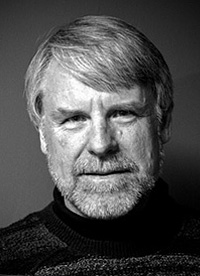
Notes on a Writing Life

There is no single path to becoming a writer. Even so, mine may seem odder than most. After writing poetry in the 1960s and publishing my first novel in 1972, I produced no books for the next twenty years. More recently I’ve written five books and co-authored a sixth.

Throughout that time, in fact since my mid-teens, I never stopped writing. Sometimes it was journalism, or journaling, or book reviews, or cultural policy documents, or notes for stories and books that didn’t get written. Sometimes it was drafts of work that got written but not published. The point was to keep writing: to express my ideas and passions, to make sense of my life at the time, or simply to earn a living. Whatever else I was doing, writing was my habit, my medium and my constant companion.

The kinds of writing I did varied widely over the years. This often had to do with the work I was doing. The fact that I could string words together was an advantage in my various jobs, whether as editor, publisher, cultural bureaucrat, consultant or, most obviously, journalist. The writing I did in those different capacities affected my creative writing. Sometimes the impact was positive. Often it wasn’t.

As long as I was writing for audiences of, say, newspaper readers or government officials, I wasn’t writing creative literature and had less energy to produce it in my “spare” time. Up to a point I could rationalize this and say I was still practising the art of communicating clearly, precisely and persuasively, which made me a more skilled and versatile writer. But as Hemingway pointed out, practising journalism too long damages a creative writer’s prose. Journalism, like other forms of functional public writing, flattens out language and syntax. It suppresses subjectivity, enervates the links between feeling and saying. It turns writing into a left-brained activity drained of emotional nuance and psychological depth. As a result it has taken me many more years of writing, in both fiction and non-fiction, to rewire my neurological circuitry and recover my own personal voice – an idiosyncratic, authentic voice free to wander wherever it wants. I’m still working on it.

This isn’t a complaint, just a fact of the writing life – mine, at least. And yet everything I’ve ever done personally and professionally, all my work experiences and private experiences, including all the genres I’ve written in, have shaped the person I am today and the writer I’m still becoming. And they’ll continue to shape the writing I produce in future.

I’ve always known there was nothing else I’d rather do than my own writing. Now I’m fortunate enough to be doing it full-time.

Roy MacSkimming
August 2007

Biography

Roy MacSkimming is the author of three novels and three works of non-fiction. Macdonald, his latest novel, recreates the final days of Canada’s founding genius, Sir John A. Macdonald. It was published by Thomas Allen on September 22, 2007.

Macdonald has earned advance praise from leading Canadian writers. Peter C. Newman calls it “a singularly well-crafted novel that deserves top place among the books on Canadian history that matter.” Aritha van Herk describes it as “a wonderful and intimate evocation of a political lion in winter in an Ottawa on the cusp of the 20th century.” Roy MacGregor states, “Whoever said Canadian history is boring needs to be given this book.” Nino Ricci writes, “Roy MacSkimming not only brings Macdonald to life, he brings him into our hearts.”

Roy MacSkimming has written two other critically praised novels, Out of Love (1993) and Formentera (1972). Both were translated into French and published in Montreal.

MacSkimming’s most recent non-fiction book, The Perilous Trade: Publishing Canada’s Writers, grew out of his career in and around Canadian book publishing. The Globe & Mail called it “masterful…a brilliantly seductive cultural history of Canada.” The Perilous Trade was named a Globe & Mail Best 100 Book of 2003 and was a finalist for the National Business Book Award. A revised and updated edition appeared in paperback from McClelland & Stewart in January 2007.

MacSkimming has written two books on hockey. Cold War: The Amazing Canada-Soviet Hockey Series of 1972 appeared in 1996. Gordie: A Hockey Legend, an unauthorized biography of Gordie Howe, was published in 1994, followed by an updated edition in 2003.

MacSkimming has also co-authored two titles: a self-published poetry chapbook, Shoot Low Sheriff, They’re Riding Shetland Ponies, with William Hawkins; and On Your Own Again, with Dr. Keith Anderson.

Roy MacSkimming was born in Ottawa in 1944 and grew up there. He attended the University of Toronto. His early poetry appeared in literary journals and the Contact Press anthology New Wave Canada. From 1964 to 1968 he worked as an editor with book publisher Clarke, Irwin. He left to travel in Europe for a year with his wife, the painter Suzette DeLey MacSkimming. The couple settled for six months on Crete to write and paint, returning to Canada to raise their two sons, Graham and Andrew.

In 1969 MacSkimming co-founded New Press in Toronto with fellow writers James Bacque and Dave Godfrey. New Press published over 120 titles, principally on Canadian political, social and cultural issues; among the press’s authors were Adrienne Clarkson, Margaret Daly, Ron Haggart, James Laxer, Dennis Lee, Walter Stewart and Mel Watkins. Together with the House of Anansi and other small presses, New Press led a Canadian publishing renaissance in the 1970s and co-founded the Association of Canadian Publishers, which lobbied successfully for government policies to strengthen the publishing industry.

When New Press was acquired by General Publishing in 1974, MacSkimming became books editor, literary columnist and publishing reporter at The Toronto Star – positions now held by three different journalists. In 1977 he moved with his family to Ottawa to work with the Canada Council for the Arts, administering policies and programs for book publishing. After four years at the Council he served with the Federal Cultural Policy Review Committee, chaired by Louis Applebaum and Jacques Hébert, as policy advisor on writing and publishing.

MacSkimming’s three careers – in book publishing, journalism and cultural policy – led to a lengthy period in Ottawa combining consulting work with writing. As an independent consultant he had clients ranging from the Department of Canadian Heritage and the Department of Foreign Affairs to the Ontario Arts Council, the National Gallery and the National Arts Centre. He also wrote for magazines such as Saturday Night, Quill & Quire and Chatelaine. In 1990 MacSkimming began a ten-year involvement with the Association of Canadian Publishers as policy director and government relations advisor.

During that period MacSkimming resumed writing books, following a hiatus after the publication of Formentera. In 2002 he and his wife built a house in the countryside near Perth, Ontario. Since then he has devoted himself full-time to writing. In the right-hand column above, MacSkimming comments on the evolution of his writing career.

Bibliography


Photo: David Zimmerly